When
examining the SLX DC
and Curado DC I-DC4
systems side by side
they looked
identical. I
wondered if Shimano
had implemented
anything in the
firmware to change
the profile, and
performance, between
the two reels.
During fishing I
found they casted
very similarly, so I
ended up heading to
an empty field with
a typical 1/2oz.
rubber casting plug
and making six casts
with each reel in
Mode 1 spooled with
10lb Trilene Big
Game to further
quantify any
differences. I tried
to do this back to
back between reels
so changing wind
conditions would not
alter the distance
results.
When
examining the SLX DC
and Curado DC I-DC4
systems side by side
they looked
identical. I
wondered if Shimano
had implemented
anything in the
firmware to change
the profile, and
performance, between
the two reels.
During fishing I
found they casted
very similarly, so I
ended up heading to
an empty field with
a typical 1/2oz.
rubber casting plug
and making six casts
with each reel in
Mode 1 spooled with
10lb Trilene Big
Game to further
quantify any
differences. I tried
to do this back to
back between reels
so changing wind
conditions would not
alter the distance
results.

The SLX DC makes use
of brass gearing for
long term durability
I was able to
achieve an average
of just under 200
feet for both reels
(198.2 feet average
for the Curado DC,
and 197.6 feet
average for the SLX
DC to be exact).
There are so many
variables when it
comes to casting,
and while I tried to
set controls
including using the
same 7'10" rods,
identical lines, and
the same casting
plug, the changes in
wind, unintended
changes in my
casting motions, and
just how tired I got
running back and
forth in that field
definitely had some
bearing in the final
results. My take is
that the systems are
identical, and the
casting performance
between the two is
also virtually the
same. This is a very
good thing for the
new reel considering
the SLX DC is $60
dollars cheaper than
the Curado DC.
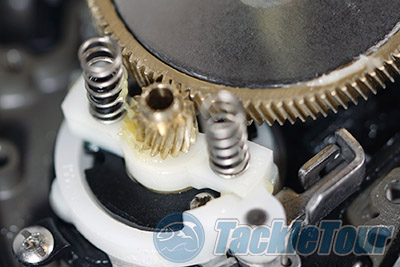
Though reasonably
smooth the gearing
does not feature the
precision cut
MicroModule
implementation found in the Curado DC
In regards to
dreaded backlashes the SLX DC is not
impossible to
birdnest, but unlike
traditional reels
you actually have to
somewhat neglect the
reel to invite backlashes,
especially when the
reel is set on Mode 4
and you
can actually cast
the reel without any
thumb action and
still manage to not
blow up the spool.
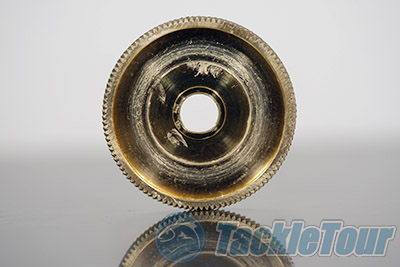
A look at the SLX
DC's primary brass
gearing
Retrieve:
With such an
impressive casting
performance why
would anyone buy a
Curado DC over the
new SLX DC? The two
biggest reasons are
retrieve and
refinement. Once you
have cast your bait
and start cranking
you will notice that
the Curado DC is
considerably
smoother, and
especially so when
under the load of a
deep crankbait or
battling a fish.
While the SLX DC's
brass gearing does
an admirable job
delivering a
consistent retrieve
it is still no match for
the MicroModule
gearing found in the Curado DC which
helps give the more
expensive reel a
smoother and more
powerful overall
feel.

Ergonomically the
SLX DC palms well
and feels very
similar to the
standard SLX
The Curado DC also
benefits from CI4+
sideplates, more
bearings, and the
implementation of
X-Ship, all of which
only help make the
reel feel even more
solid and refined
with each and every
cast and retrieve.
The painted finish
and aluminum
components, like the
anodized green drag
star, also give the
Curado DC an edge
when it comes to
looking, and
feeling, more
high-end.
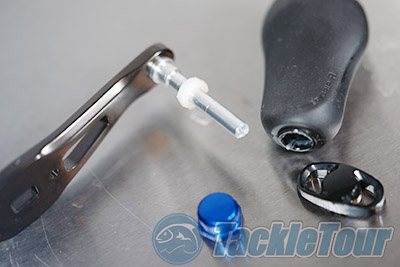
Polymer bushings
support the power
knobs
Overall the SLX DC's
retrieve is on par
on with the original
reel and our test
reel has held up
well over the
season. The fact
that Shimano offers
all three retrieve
ratios (6.2:1,
7.4:1, 8.5:1) in
both right and left
hand retrieves is
excellent as this
new series covers
the complete
spectrum of
applications and
mainstream angler
preferences.

Under load the SLX
DC is noticeably
less smooth than the
Curado DC
Drag: The SLX
DC delivered
11.2lbs. of drag
pressure in our lab
tests which is right
above Shimano's
own rating of 11lbs. of
maximum drag. This
is
also near identical
to the rating we
found in the
original SLX reel,
and like the non DC
version this new
reel
makes use of a carbon and felt
drag stack that
sandwiches the
primary brass
gearing.
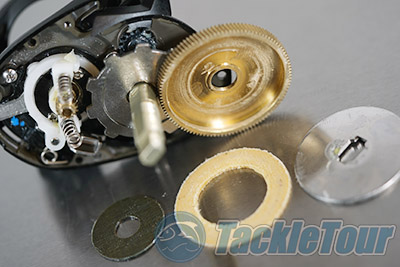
The SLX DC features
the same
multi-material drag
design as the
original SLX
It would have been
nice to see an
upgrade to the drag
over the standard SLX reel
but there isn't
anything wrong with
the proven system.
What this drag lacks
in terms of maximum
pressure it makes up
for with smooth and
reliable
performance, there
simply isn't much to fail
here.
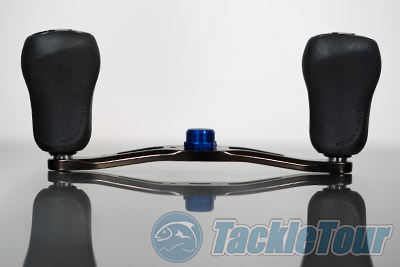
A swept handle
supports the massive
handle knobs